Berry lovers unite
Join our community for tasty recipe ideas, handy hints, seasonal fun facts and more.
June 26, 2025 in Berry News
Nature has some pretty brilliant ways of helping to manage pest control. Here are some of the top team players:
Here’s something that drives everything we do on our berry farms: nature already has most of the answers. Healthy ecosystems are extraordinarily good at looking after themselves, and our growers have spent years studying how that works and applying those same principles to their crops.
Here’s who’s on our team.
The persimilis mite is one of our favourite creatures on the farm.
Two-spotted spider mites are one of the most persistent pests in berry growing, colonising plants rapidly and affecting their ability to produce quality fruit. The persimilis mite is nature’s answer to that problem: a tiny but brilliantly effective predator that feeds almost exclusively on spider mites.
We introduce them directly onto affected crops, where they get to work immediately, seeking out and consuming the pest population with impressive speed. No residues, no harm to other insects, no impact on the fruit. Just a very hungry little helper doing exactly what it was born to do.
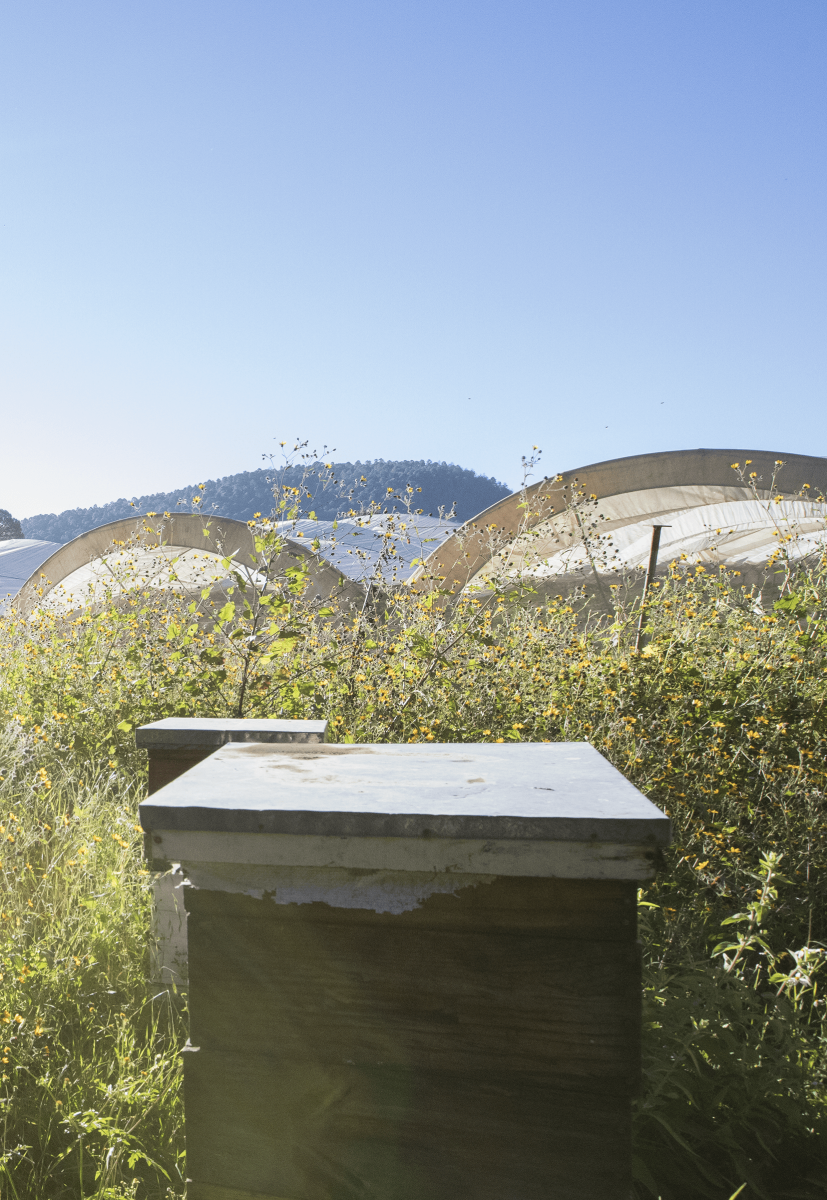
Bees don’t eat pests, but they might be the most important members of the whole team.
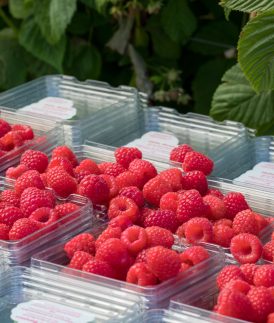
Over 85% of the world’s flowering plants depend on bee pollination, and the quality of that pollination shows up directly in your berries. On a raspberry or blackberry, each little sphere (called a drupelet) is the result of its own individual pollination event. More bees, better pollination, more drupelets, better berries. When you pull a perfectly plump Driscoll’s raspberry out of the punnet, that’s a bee’s work you’re looking at.
The catch is that bees and pesticides simply don’t mix. Bees won’t pollinate plants coated in chemicals, and certain insecticides are lethal to them. Every time we choose a natural approach to pest management, we’re also choosing to protect the pollinators that make our harvests possible. It all connects.
It takes more knowledge, more patience, and a genuine love of understanding how a farm ecosystem ticks. But the berries it produces, and the land it leaves behind, make it absolutely worth it. We wouldn’t have it any other way.
Join our community for tasty recipe ideas, handy hints, seasonal fun facts and more.

Driscoll's Australia recognizes the Aboriginal and Torres Strait Islander peoples as the original inhabitants and the Traditional Custodians of the lands we cultivate, work, and live on.
© 2024 Driscoll's Australia Pty. Ltd. All rights reserved.